W.O.W.’s 10 year anniversary symbol is the 長命鎖 longevity lock, a heart protector, reminding us why a decade later we continue to grow and protect Chinatown’s cultural fabric despite rapid change and political upheaval. In this spirit, we are committed to cultivating resilient and healing infrastructures so that self-determination is possible for Chinatown’s future.
10th Year anniversary program SeriesW.O.W. at 10
ABOUT W.O.W. AT 10
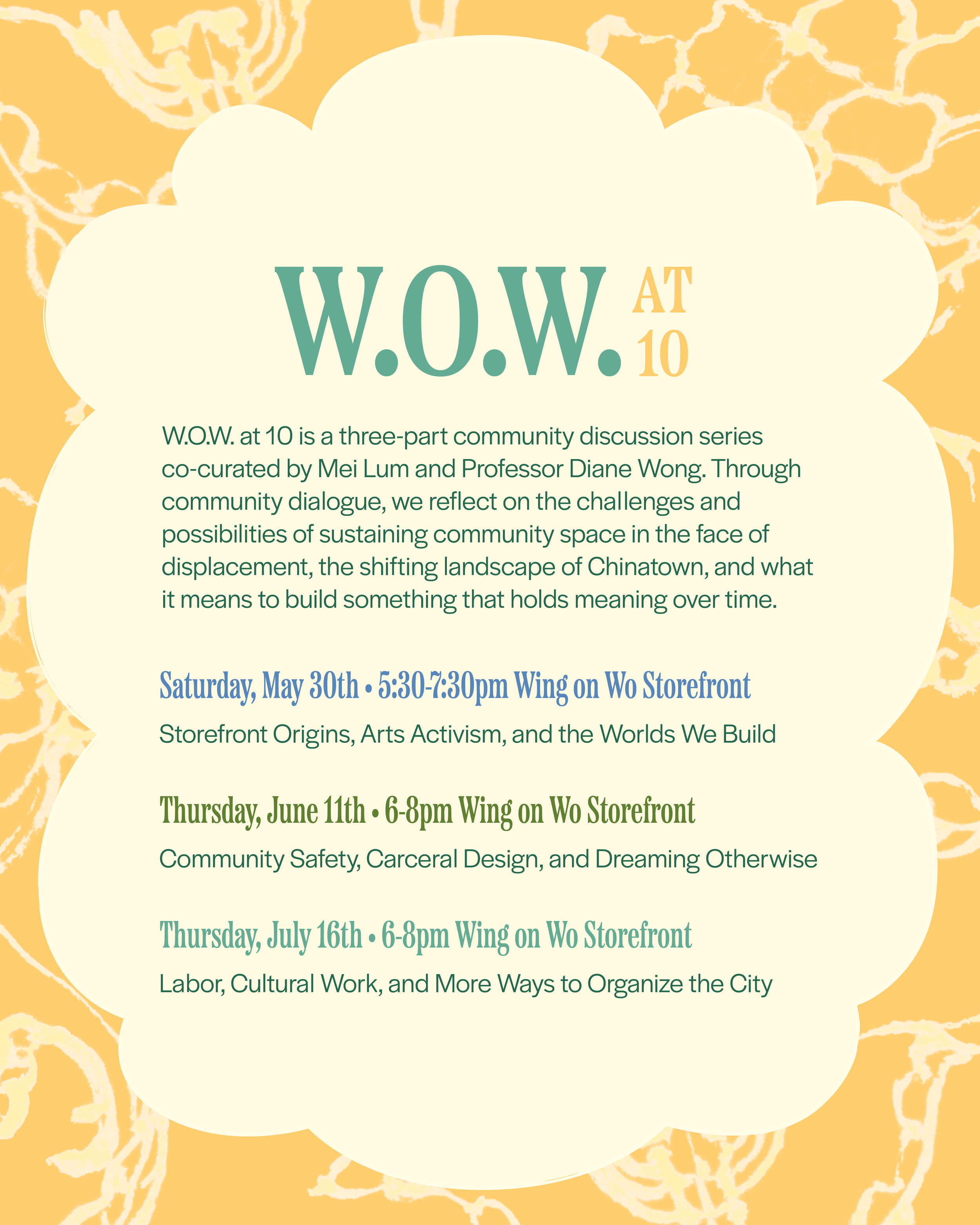
W.O.W. at 10 is a three-part community discussion series co-curated by Mei Lum and Professor Diane Wong. Through community dialogue, we reflect on the challenges and possibilities of sustaining community space in the face of displacement, the shifting landscape of Chinatown, and what it means to build something that holds meaning over time.
Storefront Origins, Arts Activism, and the Worlds We Build
Saturday, May 30th / 5:30-7:30pm
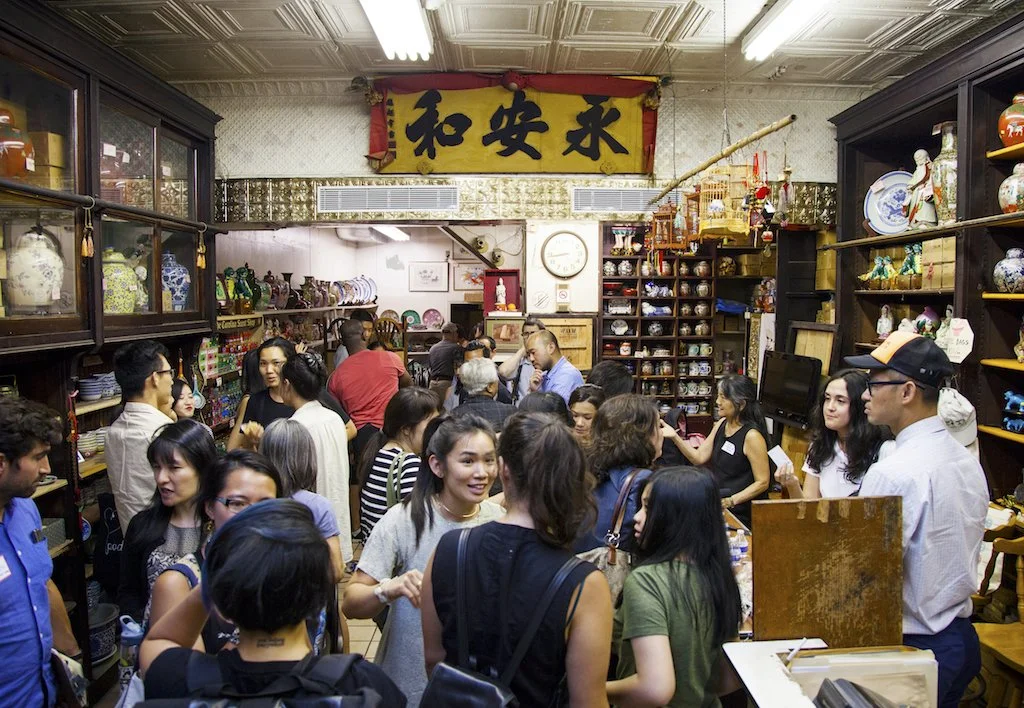
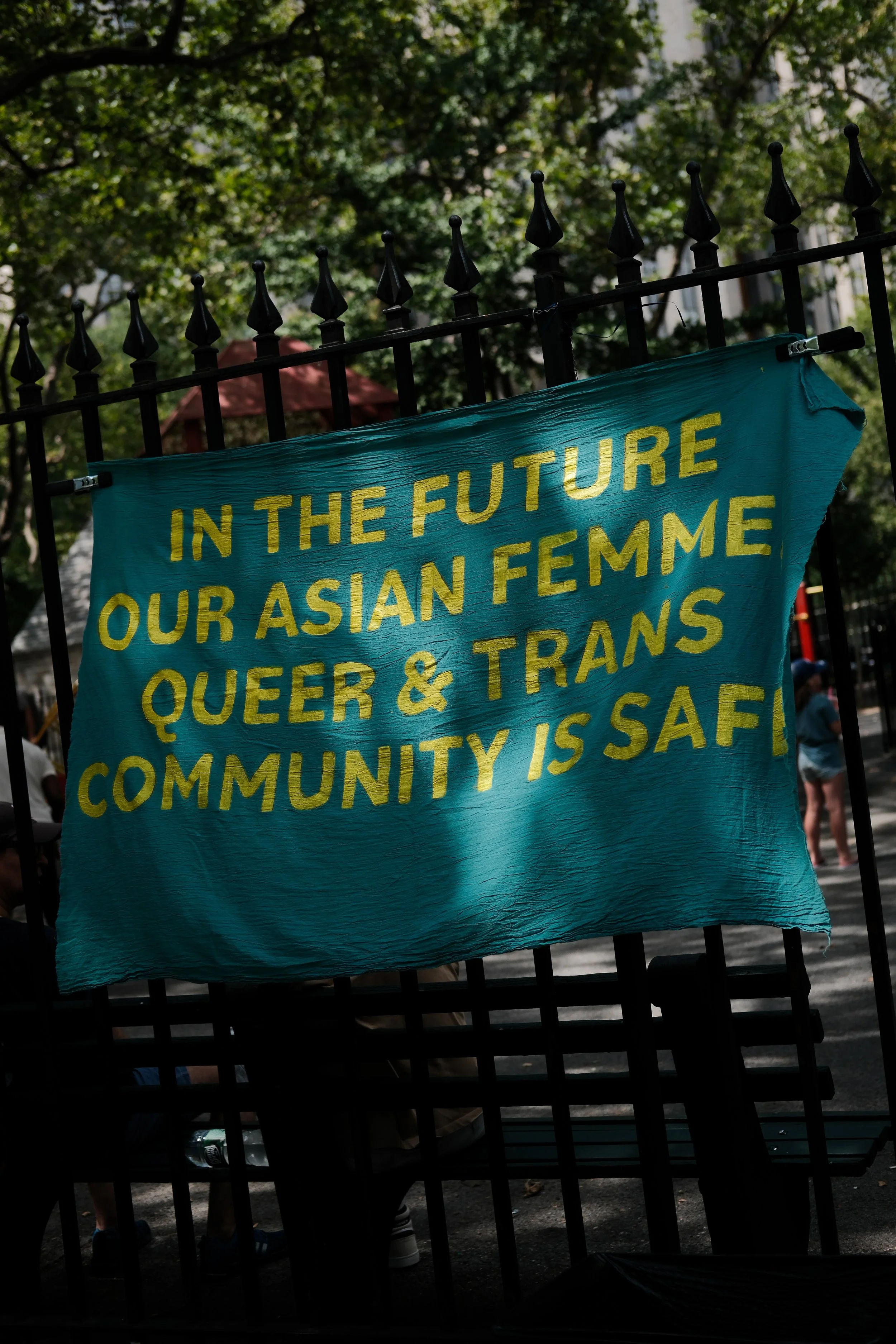
In this opening conversation, Mei Lum and Diane Wong will revisit the origins of W.O.W—from their early kitchen table conversations to its evolution into a community arts initiative that centers women, queer, non-binary, and trans Asian youth as stewards of Chinatown’s creative culture. Grounded in personal stories and collective memory, this dialogue invites us to pause and to consider how spaces like W.O.W. speak to the possibility of a neighborhood defined by people rather than by profit, where value is measured through cultural continuity and collective belonging rather than speculative capital. The conversation also opens up questions about the tensions and possibilities of doing cultural work in a moment shaped by ongoing struggles over land, safety, and displacement—and how we might imagine the next decade together.
The conversation will be moderated by current and former youth leaders Sasa Yung and Angela Chan. Whether you’ve been part of W.O.W. since the beginning or are just getting to know the work, we welcome you to join us for an evening of reflection, celebration, and community. RSVP Here.
Labor, Cultural Work, and More Ways to Organize the City
Thursday, June 11th / 6-8pm
This conversation draws crucial connections between cultural work and labor organizing in working-class communities across New York City. Bringing together organizers, artists, and community members, the event traces how struggles over labor and land are deeply intertwined—from tenants organizing against evictions in Chinatown to campaigns resisting casino development in Flushing, and movements to decriminalize sex work—we ask: are there other ways to organize the city? What forms of solidarity are necessary to build communities rooted in care? By placing past and present organizing in dialogue, this program invites us to consider what forms of organizing are needed in this moment, and how we build toward more sustainable futures for Chinatown residents and all working-class communities.
Whether you’ve been part of W.O.W. since the beginning or are just getting to know the work, we welcome you to join us for an evening of reflection, celebration, and community. RSVP Here.
Community Safety, Carceral Design, and Dreaming Otherwise
Thursday, July 16th / 6-8 PM
Building on years of organizing, this conversation brings together artists, organizers, and community members to examine the impact of the Borough-Based Jail Plan (BBJP) in New York City, with a focus on the skyscraper jail being constructed in Chinatown. Situating the project within a broader landscape of mass incarceration and displacement—from the police takeover of Park Row to the expanding carceral reach in Chinatown—we ask: what does community safety mean and who gets to define it?In place of a jail, what else could be here?
The program explores the role of artists and cultural workers in the aestheticization of carceral systems through design, and how art can obscure the violence of incarceration, even as it can also serve as a tool of resistance. We invite participants to reflect on what it means to refuse participation in carceral design and to imagine alternative futures grounded in care, collective well-being, and worlds beyond punishment.