
Other Projects > Residencies > Storefront Artist Residency
2nd 店面 Artist-in-Residence: Emily Mock
Winter 2018
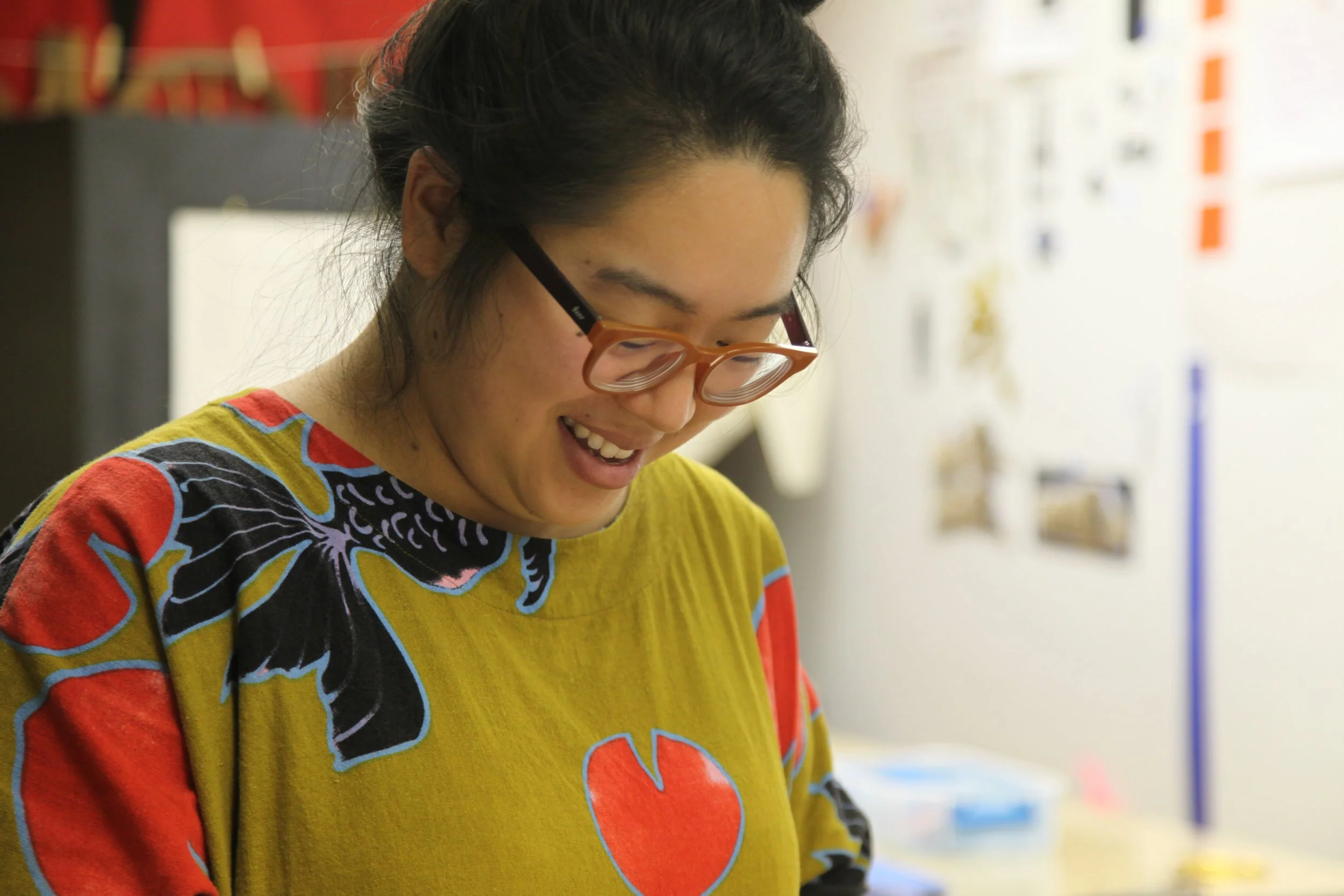
Emily Mock is an artist making paper cuts and performative works from paper. She studies and uses the crafts and methods of her cultures and ancestors to explore the dynamics of ancestor/diaspora, place/identity/displacement, and how communities build power. She makes paper cuts, develops and facilitates curricula, and organizes cultural programming as an exercise of how culture and heritage are realized in bodies, places, knowledge, and experience. Having lived in the Outer Sunset, Western Massachusetts, Oxford, Chengdu, and NYC, she is interested in how place and identity frame each other, as well as access to ancestral knowledge and crafts. Originally from San Francisco and currently living in New York City, she is a cultural and community organizer and educator working at CAAAV: Organizing Asian Communities as the Chinatown Tenants Union Membership Organizer. She was the Center for Neighborhood Leadership Community Organizing Apprentice for two years at The Laundromat Project. As an educator at the Museum of Chinese in America, Emily gives survey and specialized gallery tours and walks. She holds a BA from Smith College in Art History and Political Science. Inspired by the youth and elder tenant leaders in Manhattan Chinatown from CAAAV and the Chinatown Tenants Union, Emily is working on a bilingual paper cut book about a diasporic community of color’s fight against gentrification and displacement.
Emily Mock
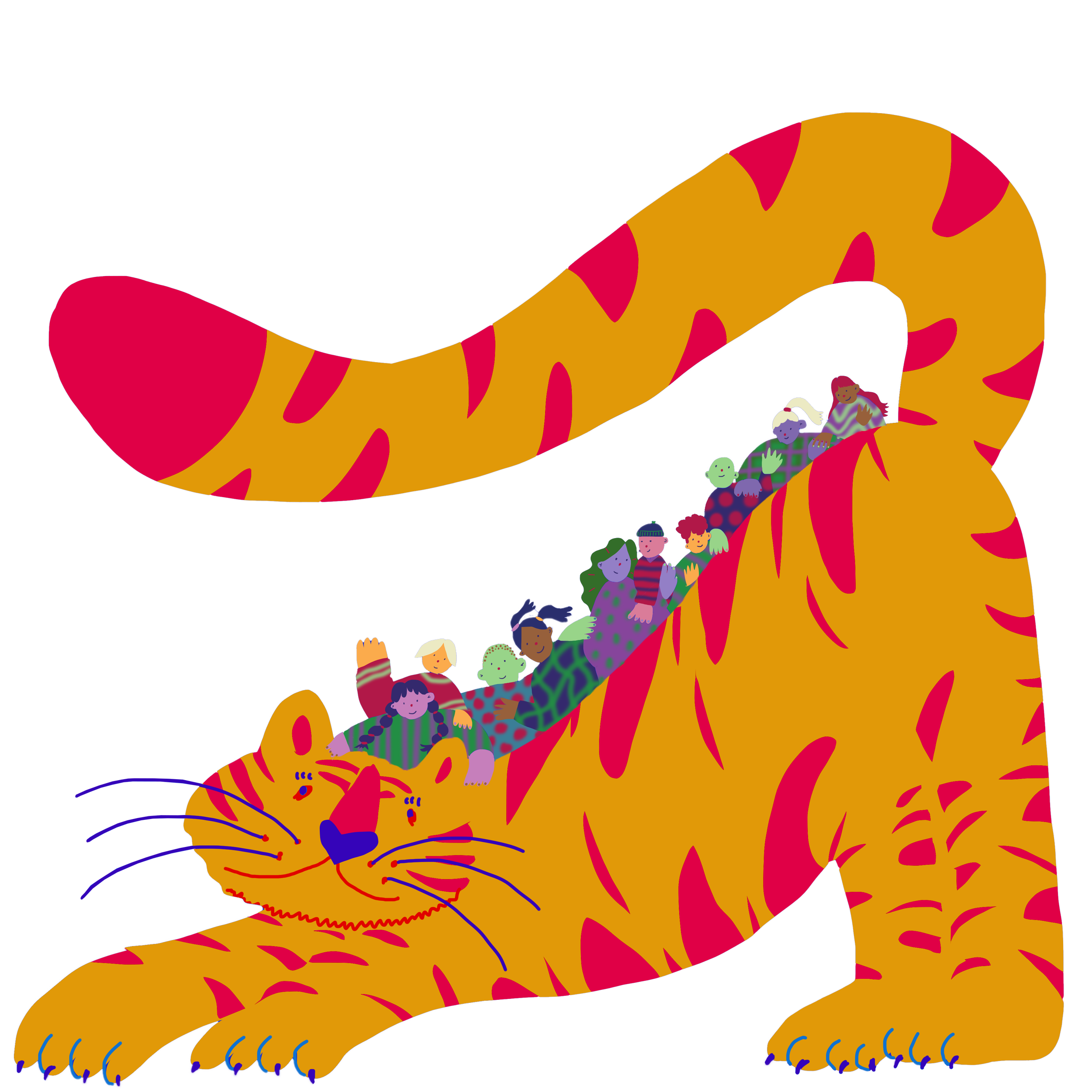
ABOUT THE PROJECTWatch our recap of Emily Mock's Storefront Residency!
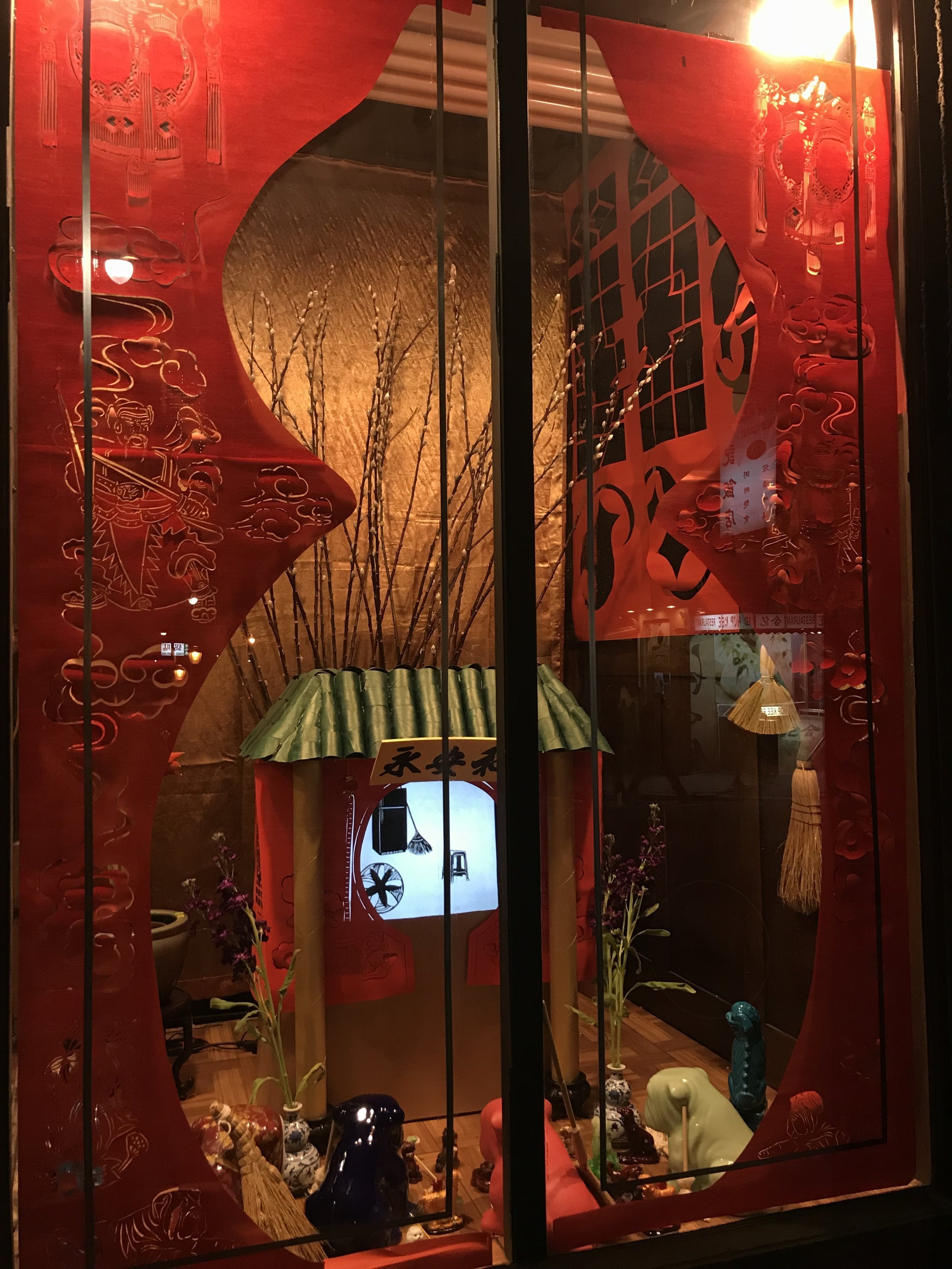
W.O.W. Shadow Puppet Theater is a community project centered on the question “what do you do to sweep away evil?” From October through January, as the 店面Storefront Artist-in-Residence and alongside Residency Coordinator Clara Lu, I held public programs and workshops in the Wing On Wo studio and Columbus Park, teaching paper cutting and shadow puppetry. Participants made their own puppets and devised short plays based on memories, practices, traditions, or imaginaries about how they sweep away evil. These recorded plays were featured from February through March 2018 as a storefront window installation at Wing on Wo & Co.
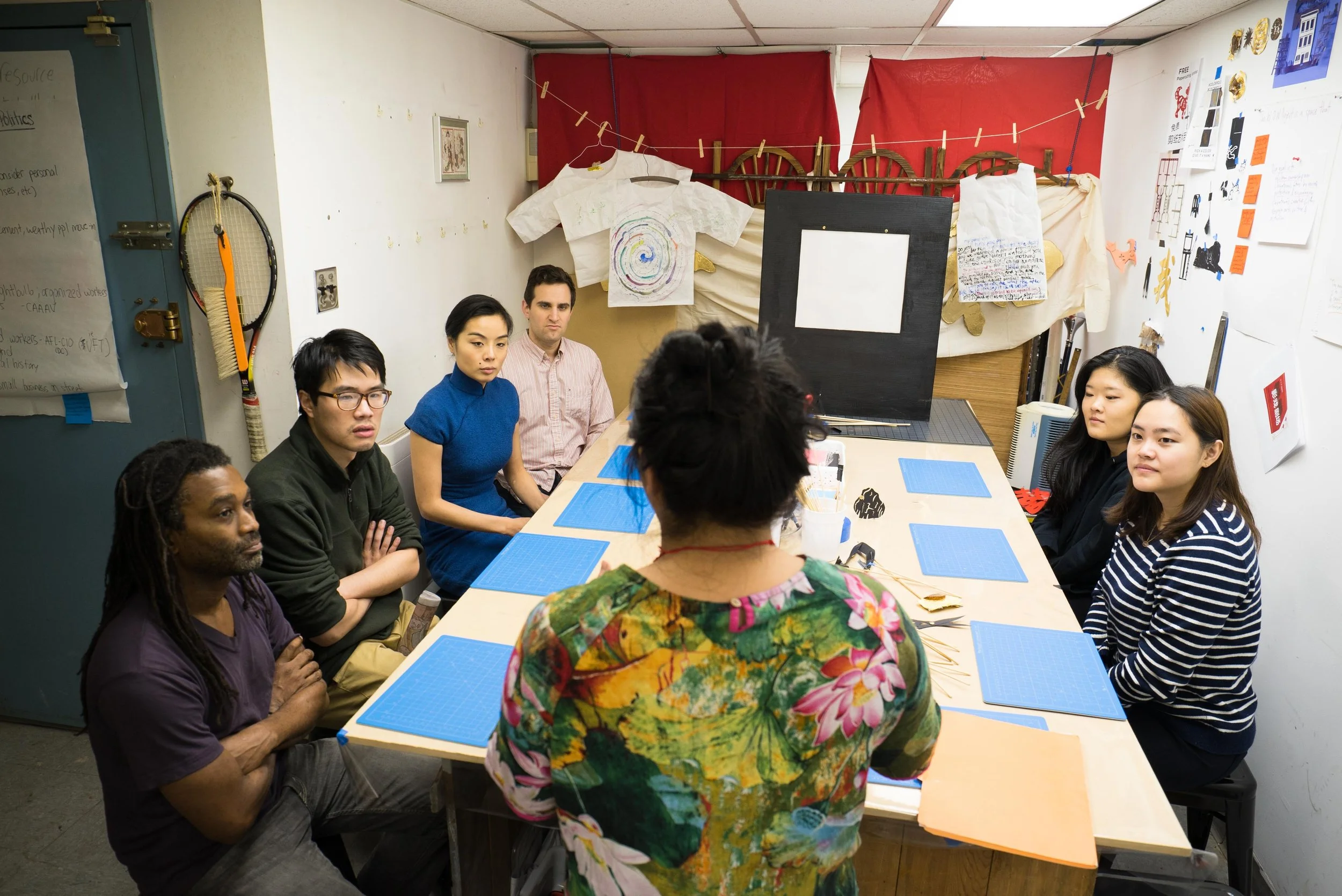
In China, I'd seen street sweepers use brooms with different materials in different cities. The only people-led protest I saw was city-employed street sweepers in Chengdu rallying in front of a police station near my apartment. I dream about what it looks like to oust slumlords. I was an adult when I became aware of the significance of sweeping for how Chinese prepare for the new year. The prompt for making W.O.W. Shadow Puppet Theater was "what do you do to sweep away evil?" In the context of mass displacement of housing and culture in Manhattan Chinatown, it is also guided by the questions, "who is this for?" and "who can afford it?" The project's theme comes from a specific action and belief that many new year celebrators have: you should sweep your home and spaces to ward away bad luck/evil spirits of the old year while regenerating and opening space to the good luck of the new year.
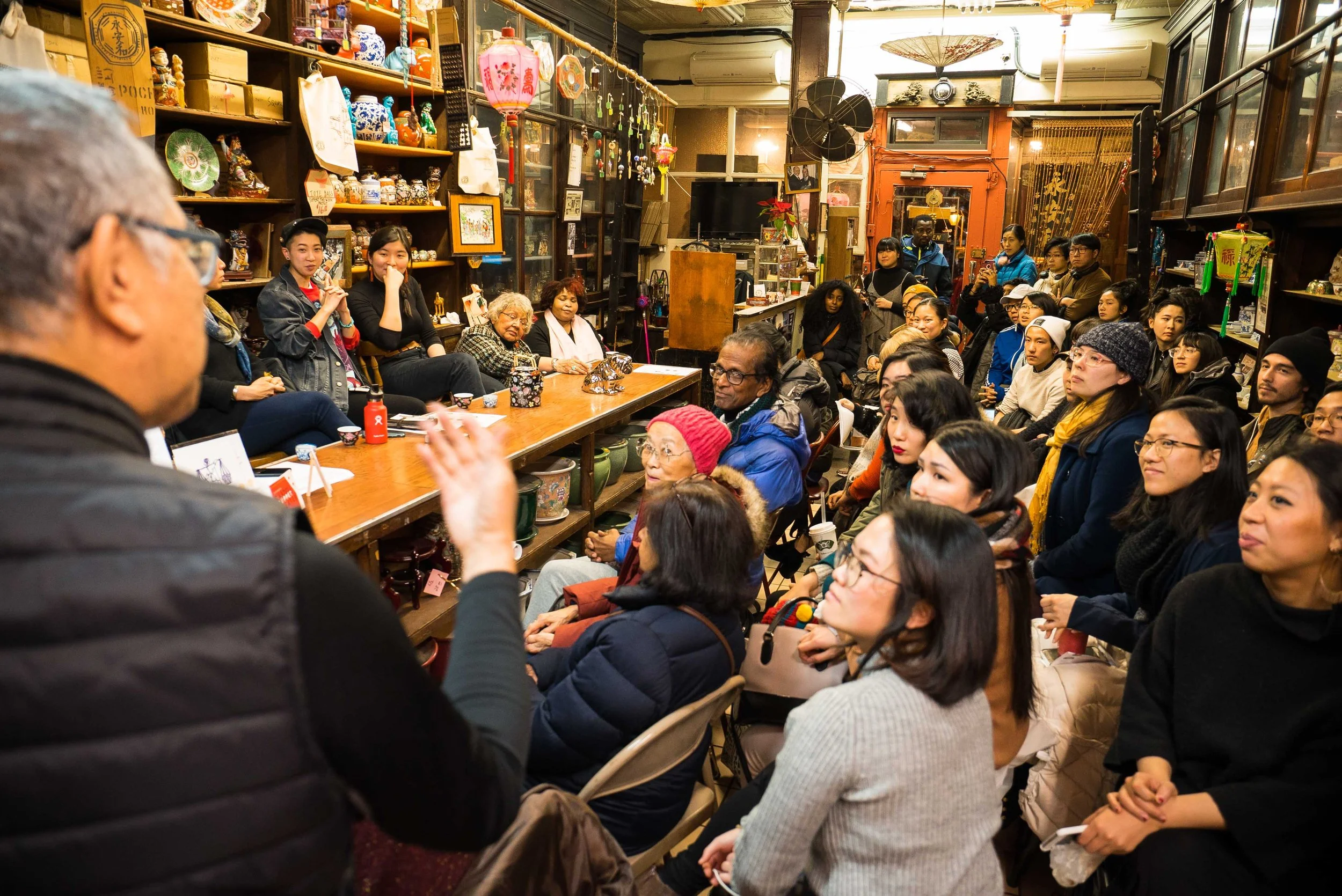
To consider this idea from different and related perspectives, I asked a group of panelists who span several generations what traditions of knowledge and power they use to “sweep away evil.” The panelists, Melanie Wang, Fay Bonas, Muriel Miguel, Jes Tom, and Donna Mah, discussed how their lives and practices of community organizing, visual arts, theater making, stand-up comedy, and Chinese medicine brought them to confront evils, interpret history, and understand healing.
Thank you to the participants and supporters of this project, which came from many traditions and people's efforts.